Key Takeaways
- Paul's conversion exemplifies radical change
- His mission expanded Christianity's reach
- Letters shaped Christian doctrine
- Perseverance through persecution inspires us
In the annals of history, few figures have experienced a transformation as radical as that of Paul the Apostle. Known initially as Saul of Tarsus, Paul’s journey from a zealous persecutor of Christians to one of the most influential apostles in the Christian faith is nothing short of remarkable. This transformation not only changed his life but significantly shaped the course of Christianity. Whether you’re a student of history, theology, or simply curious about remarkable personal transformations, Paul’s story offers profound insights into resilience, faith, and mission.
From Saul to Paul: A Transformation Beyond Belief
The Early Life of Saul
Born in Tarsus, a vibrant city in present-day Turkey, Saul was a Roman citizen by birth. Coming from a Jewish family, he was steeped in Jewish traditions and brought up as a Pharisee—a faction known for strict adherence to Jewish law.
- Education: Saul was a scholar, taught by Gamaliel, a respected teacher of the law, which equipped him with a deep understanding of the Hebrew Scriptures.
- Persecutor of Christians: Saul’s zeal for Jewish law drove him to become a staunch opponent of the early Christian movement, perceiving it as a threat to Jewish orthodoxy.
The Damascus Road Encounter
Saul’s conversion is often regarded as the turning point in his life—a dramatic encounter with the divine that would reshape his identity and purpose.
- Divine Intervention: On his way to Damascus with the intent to arrest Christians, Saul experienced a vision of resurrected Jesus. This moment is described as a brilliant light from heaven and a voice questioning his persecution.
- Temporary Blindness: Struck blind by the encounter, Paul’s physical affliction mirrored his spiritual revelation, symbolizing his need to perceive the world differently.
- Ananias’s Role: In Damascus, Ananias, a devout disciple, was guided to heal Saul and restore his sight, marking the completion of his conversion to Christianity.
Rebirth as Paul
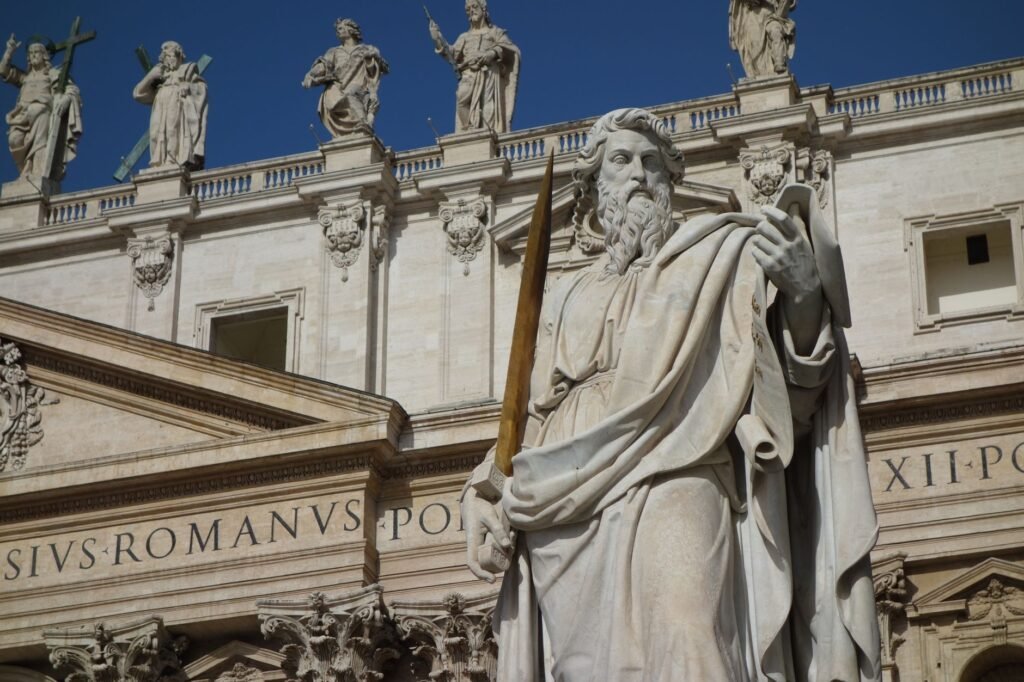
Following his conversion, Saul took the new name, Paul, symbolizing his new mission and life as a follower of Jesus Christ.
A Mission of Unprecedented Reach
The Apostolic Mission
Paul’s newfound faith ignited a mission that was both expansive and enduring.
- Church Planting: Paul embarked on multiple missionary journeys across the Roman Empire, establishing Christian communities in key urban hubs such as Corinth, Ephesus, and Philippi.
- The Epistles: His letters to these communities, known as epistles, form a significant portion of the New Testament, providing guidance and theological insights that are foundational to Christian doctrine.
Theological Contributions
Paul’s theological insights played a critical role in shaping Christianity.
- Faith and Grace: Paul emphasized salvation through faith and grace, rather than mere adherence to the law, thus redefining the essence of Christian faith.
- Universal Message: He advocated that the message of Jesus Christ was universal, accessible to both Jews and Gentiles, thereby expanding the reach of Christianity beyond ethnic boundaries.
Challenges and Perseverance
Paul’s mission was not without obstacles.
- Persecutions: Throughout his life, Paul faced numerous persecutions, including imprisonment and beatings, yet his commitment to spreading the Gospel remained unwavering.
- Conflicts and Councils: Navigating theological disputes within the Early Church, Paul’s efforts were instrumental in convening councils which addressed core doctrinal issues.
Reflection Point
Consider how God can transform your life, just as He did with Paul. Embrace your unique mission with faith and purpose.
Frequently Asked Questions
What was Paul's original role before his transformation?
Paul, initially known as Saul, was a zealous persecutor of Christians who sought to uphold Jewish law. His transformation began with a divine encounter on the road to Damascus.
How did Paul contribute to the early Church?
Paul established numerous Christian communities across the Roman Empire and wrote letters, or epistles, that provided essential guidance and theological insights for the early Church.
What challenges did Paul face during his mission?
Paul faced significant challenges, including imprisonment, beatings, and theological disputes, yet he remained steadfast in his commitment to spreading the Gospel.
What can we learn from Paul's story?
Paul's story teaches us about the power of transformation through faith and the importance of perseverance in our own mission to spread love and truth.
Conclusion: Legacy of Transformation and Mission
The story of Paul is one of profound transformation and relentless mission. From being a persecutor to becoming a pivotal architect of Christian theology, his life exemplifies how profound personal change can lead to world-changing ramifications. Paul’s legacy endures in the doctrine, practices, and global reach of Christianity today, offering a powerful testament to the potential of faith and mission-driven life. For anyone exploring transformative journeys and lasting legacies, Paul’s story remains an inspirational beacon of how one’s path can transcend its origins, driven by conviction and purpose.
Further Study