Key Takeaways
- The Eucharist is a sacred encounter with Christ
- It symbolizes spiritual nourishment and unity
- Scripture reveals its deep significance
- Understanding it enriches Christian worship
The Eucharist—also known as Holy Communion or the Lord’s Supper—stands at the heart of Christian faith and worship. For millions of believers around the world, it is far more than a symbolic ritual; it is a sacred encounter with Christ Himself. But what does the Bible actually say about the Eucharist?
In this post, we’ll explore key Bible verses about the Eucharist, examining both Old and New Testament passages that reveal its meaning, purpose, and deep spiritual significance. Whether you’re preparing for a Bible study, seeking to deepen your faith, or simply curious about the biblical roots of Communion, this guide will walk you through Scripture in a clear and engaging way.
What Is the Eucharist?
The word Eucharist comes from a Greek term meaning “thanksgiving.” It refers to the Christian practice of sharing bread and wine in remembrance of Jesus Christ’s sacrifice.
Across Christian traditions, the Eucharist is understood as:
- A memorial of Christ’s death and resurrection
- A participation in His body and blood
- A source of grace and spiritual nourishment
The Bible provides the foundation for all of these beliefs.
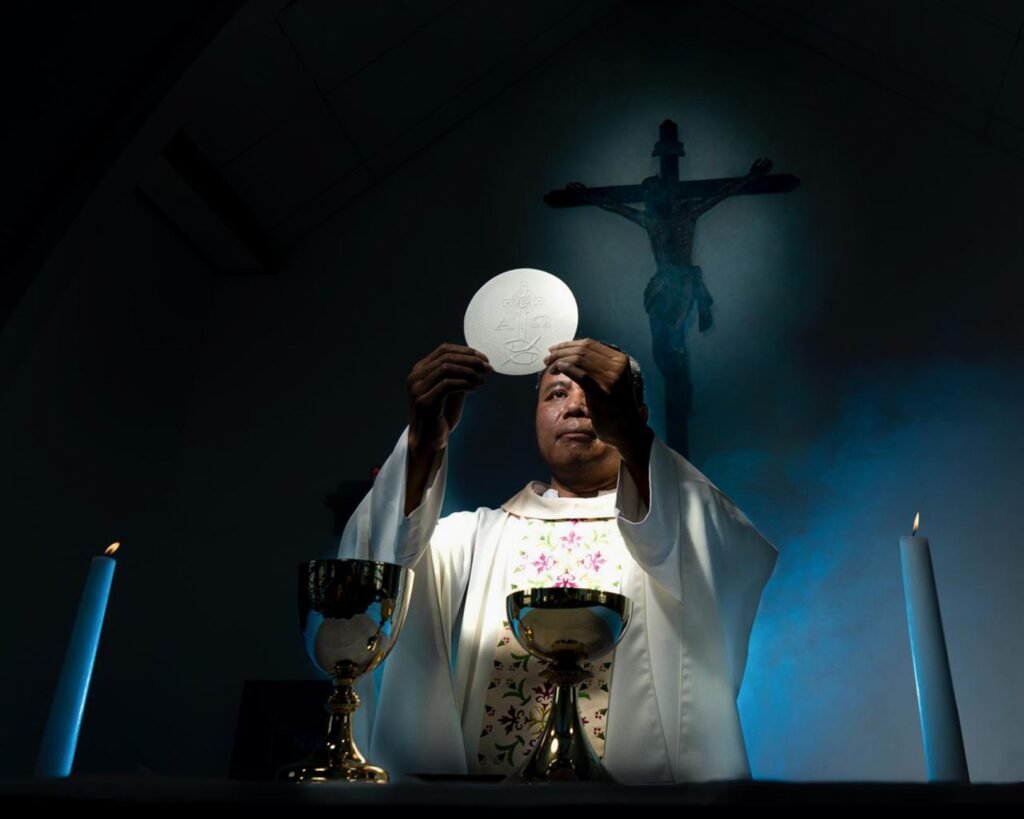
Old Testament Foreshadowing of the Eucharist
Although the Eucharist is fully revealed in the New Testament, several Old Testament passages foreshadow this sacred practice.
1. Manna from Heaven
“I will rain down bread from heaven for you.” – Exodus 16:4
When God fed the Israelites with manna in the wilderness, He showed Himself as the provider of heavenly nourishment. Jesus later connects this miracle directly to Himself, revealing that He is the true bread from heaven.
2. The Passover Lamb
“This is the blood of the covenant, which the Lord has made with you.” – Exodus 24:8
The Passover meal, centered on the lamb and the blood of the covenant, is a powerful precursor to Christ’s sacrifice. Jesus, the Lamb of God, fulfills this image in the Eucharist.
Reflection Point
As you prepare for Communion, take a moment to reflect on the profound grace it offers. Allow these scriptures to deepen your appreciation and connection with Christ.
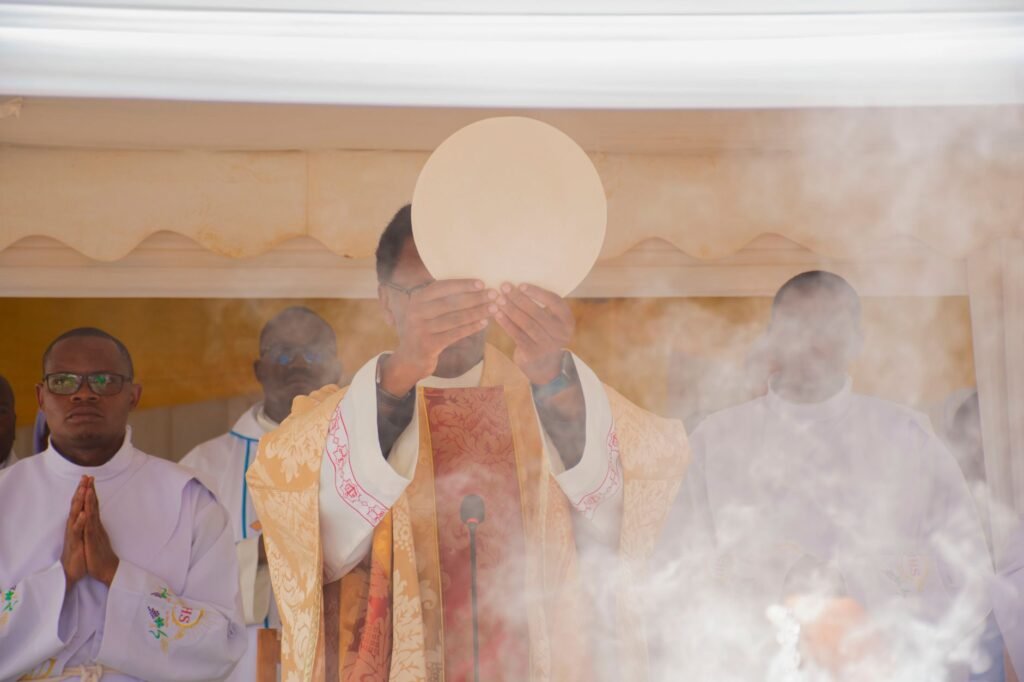
Jesus’ Teachings on the Eucharist
3. The Bread of Life Discourse
One of the most direct biblical teachings on the Eucharist comes from Jesus Himself:
“I am the living bread that came down from heaven; whoever eats this bread will live forever.” – John 6:51
In John 6:53–56, Jesus further says:
“Unless you eat the flesh of the Son of Man and drink his blood, you have no life in you.”
This passage emphasizes:
- The necessity of spiritual nourishment
- A deep union between Christ and the believer
- The life-giving power of the Eucharist
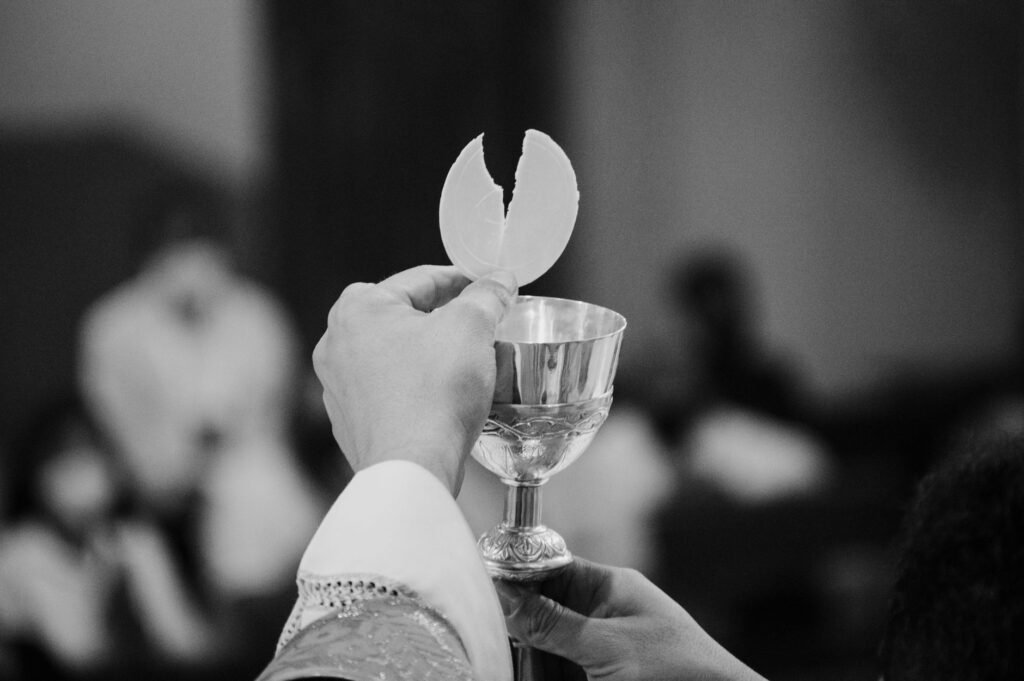
The Institution of the Eucharist at the Last Supper
4. Jesus Institutes Holy Communion
The clearest biblical foundation for the Eucharist comes from the Last Supper:
“Take, eat; this is my body.” – Matthew 26:26
“This cup is the new covenant in my blood.” – Luke 22:20
These words are echoed across the Gospels and in Paul’s writings, highlighting their importance in early Christian worship.
Key Elements Established by Jesus:
- Bread represents His body
- Wine represents His blood
- The Eucharist is a new covenant
- Believers are called to do this in remembrance of Him
The Eucharist in the Early Church
5. The Practice of the First Christians
The early Church took Communion seriously, seeing it as essential to Christian life:
“They devoted themselves to the apostles’ teaching and to fellowship, to the breaking of bread and to prayer.” – Acts 2:42
The phrase “breaking of bread” is widely understood as a reference to the Eucharist.
6. Paul’s Teaching on the Lord’s Supper
Paul offers one of the earliest written testimonies of the Eucharist:
“For I received from the Lord what I also passed on to you.” – 1 Corinthians 11:23–26
He emphasizes:
- The sacred nature of Communion
- The need for self-examination
- The proclamation of the Lord’s death until He comes again
Spiritual Meaning of the Eucharist in Scripture
The Bible reveals several layers of meaning within the Eucharist:
The Eucharist Is:
- A remembrance of Christ’s sacrifice (Luke 22:19)
- A participation in His body and blood (1 Corinthians 10:16)
- A spiritual nourishment for eternal life (John 6:54)
- A sign of unity among believers (1 Corinthians 10:17)
These verses show that Communion is not merely symbolic but deeply relational and transformative.
Why Bible Verses About the Eucharist Matter Today
Understanding Bible verses about the Eucharist helps believers:
- Appreciate the depth of Christ’s sacrifice
- Participate in Communion with greater reverence
- Strengthen their relationship with Jesus
- Live out their faith in gratitude and obedience
When Scripture illuminates our spiritual practices, those practices become richer and more meaningful.
Frequently Asked Questions
What is the significance of the Eucharist in Christianity?
The Eucharist signifies a sacred remembrance of Christ’s sacrifice, a participation in His body and blood, and a source of spiritual nourishment for believers, as revealed in Scripture.
How did Jesus institute the Eucharist?
Jesus instituted the Eucharist during the Last Supper by breaking bread and sharing wine with His disciples, declaring them symbols of His body and blood, establishing a new covenant.
Why is the Eucharist considered a communal act?
The Eucharist is a communal act because it signifies the unity of believers as one body in Christ, as emphasized in 1 Corinthians 10:17, fostering a shared faith experience.
How can I prepare for receiving the Eucharist?
Prepare for the Eucharist through prayer and self-examination, seeking forgiveness and a deeper relationship with Christ, as encouraged in 1 Corinthians 11:28.
Conclusion: The Eucharist Through the Lens of Scripture
From the manna in the wilderness to the Last Supper and the early Church, the Bible paints a clear and powerful picture of the Eucharist. These sacred verses reveal God’s desire to draw near to His people, nourish their souls, and establish a lasting covenant through Jesus Christ.
As you reflect on these Bible verses about the Eucharist, consider not just what they say, but what they invite you to experience: deeper faith, communion with Christ, and a thankful heart. The Eucharist is, at its core, a divine gift—one that continues to shape Christian life and worship today.
If you’re exploring your faith or renewing your commitment, let these Scriptures guide you closer to the table where Christ meets His people.