Introduction
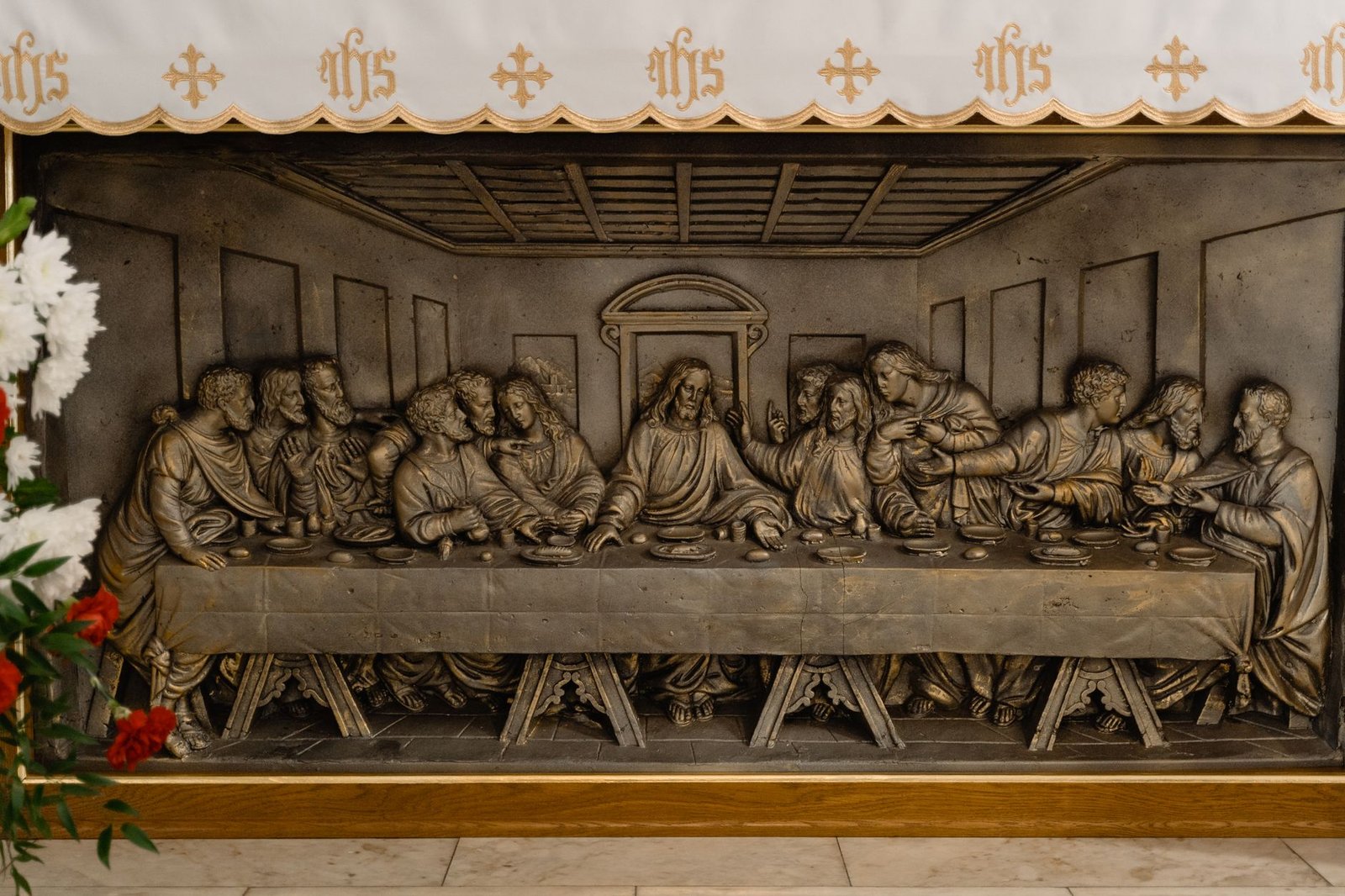
The Last Supper stands as one of the most sacred and significant events recorded in Scripture. It was the final meal Jesus shared with His disciples before His crucifixion. This moment was not only a farewell dinner, it was the establishment of a powerful covenant between God and humanity. For believers today, reflecting on the Last Supper offers a deeper understanding of Jesus’ love, sacrifice, humility, and the gift of communion that continues to strengthen the body of Christ.
The Last Supper reminds Christians that faith is grounded in relationship and remembrance. Through the bread and the cup, Jesus invited His followers into an everlasting fellowship with Him. Exploring Bible verses about the Last Supper helps believers appreciate the depth of this event and its meaning for spiritual life today.
The Setting of the Last Supper
The narrative of the Last Supper appears in Matthew 26, Mark 14, Luke 22, and John 13. Each Gospel presents important details about the final evening Jesus spent with His disciples before going to the cross.
The meal took place during the Passover feast. This is very important because Passover reminded the Jews of how God delivered Israel from slavery in Egypt. In Exodus, the Israelites were protected from judgment by the blood of a lamb placed on their doorposts. At the Last Supper, Jesus revealed that He was the true Passover Lamb whose blood would bring salvation to the world.
This means the Last Supper was not an ordinary meal. It connected the Old Testament story of deliverance with the New Testament message of redemption through Christ. What God began in the Passover was fulfilled in Jesus’ death and resurrection.
Luke 22:19, Remembering the Body of Christ
Luke 22:19 says:
Related Posts:
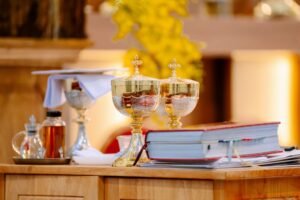
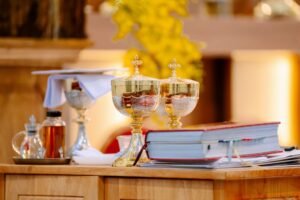
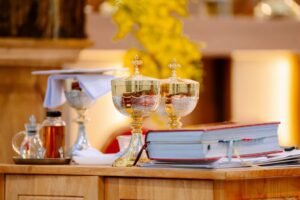

“And he took bread, and gave thanks, and brake it, and gave unto them, saying, This is my body which is given for you: this do in remembrance of me.”
This verse reveals the meaning of the bread. Jesus took bread, gave thanks, broke it, and gave it to His disciples. The breaking of the bread symbolized His body, which would soon be broken through suffering and crucifixion.
The phrase “given for you” shows the personal nature of Christ’s sacrifice. Jesus did not die accidentally. He willingly gave Himself for sinners. His body was offered so that humanity could be reconciled to God.
When believers take communion today, they remember the body of Christ. This remembrance is not merely historical. It is spiritual reflection. Christians remember His suffering, His obedience, His love, and His victory over sin.
The Meaning of the Bread and the Cup
During the Last Supper, Jesus used two simple elements, bread and wine, to communicate deep spiritual truths. Matthew 26:26 to 28 says:
“And as they were eating, Jesus took bread, and blessed it, and brake it, and gave it to the disciples, and said, Take, eat, this is my body. And he took the cup, and gave thanks, and gave it to them, saying, Drink ye all of it; for this is my blood of the new testament, which is shed for many for the remission of sins.”
The bread represents the body of Jesus. The cup represents His blood. Together, they point to the sacrifice He would make on the cross.
The blood of Jesus is central to Christian faith because it brings forgiveness of sins. In the Old Testament, blood sacrifices were offered for atonement. However, those sacrifices pointed forward to the perfect sacrifice of Christ. Jesus’ blood established the new covenant, which is based on grace, forgiveness, and eternal life.
The Last Supper therefore teaches that salvation is not earned by human effort. It is received through faith in the finished work of Jesus Christ.
Mark 14:22 to 24, The Blood of the Covenant
Mark 14:22 to 24 records:
“And as they did eat, Jesus took bread, and blessed, and brake it, and gave to them, and said, Take, eat, this is my body. And he took the cup, and when he had given thanks, he gave it to them: and they all drank of it. And he said unto them, This is my blood of the new testament, which is shed for many.”
This passage emphasizes covenant. A covenant is a sacred agreement established by God. In the Old Testament, God made covenants with Noah, Abraham, Moses, and David. At the Last Supper, Jesus announced the new covenant through His blood.
This new covenant is greater than the old because it brings inner transformation. Through Christ, believers receive forgiveness, access to God, and the promise of eternal life. The blood of Jesus is not only a symbol of suffering, it is the price of redemption.
John 13:1 to 5, Jesus Washes the Disciples’ Feet
John’s Gospel gives another powerful detail from the Last Supper. John 13:4 to 5 says:
“He riseth from supper, and laid aside his garments; and took a towel, and girded himself. After that he poureth water into a bason, and began to wash the disciples’ feet.”
This act reveals the humility of Jesus. In ancient culture, washing feet was usually the duty of a servant. Yet Jesus, the Son of God, humbled Himself and washed the feet of His disciples.
This teaches an important lesson. True greatness in the kingdom of God is expressed through service. Jesus showed that leadership is not about pride, position, or control. It is about love, humility, and willingness to serve others.
The foot washing also points to spiritual cleansing. Jesus came not only to teach but to cleanse people from sin. His humility at the table prepared the disciples to understand His greater humility on the cross.
John 13:34 to 35, The Command to Love One Another
During the Last Supper, Jesus gave His disciples a new commandment. John 13:34 to 35 says:
“A new commandment I give unto you, That ye love one another; as I have loved you, that ye also love one another. By this shall all men know that ye are my disciples, if ye have love one to another.”
This command is central to the meaning of the Last Supper. Jesus was about to demonstrate the highest form of love by laying down His life. Therefore, He called His followers to love one another in the same spirit.
Christian love is not just emotion. It is sacrificial, patient, forgiving, and active. The Last Supper teaches that communion with Christ should produce unity among believers. A person cannot truly remember the love of Jesus while refusing to love others.
Luke 22:24 to 27, A Lesson Against Pride
At the Last Supper, the disciples argued about who among them was the greatest. Luke 22:26 to 27 says:
“But ye shall not be so: but he that is greatest among you, let him be as the younger; and he that is chief, as he that doth serve.”
This moment shows the weakness of human pride. Even while Jesus was preparing to suffer, the disciples were concerned about status. Jesus corrected them by teaching that greatness in God’s kingdom is measured by service.
This lesson remains relevant today. Many people seek recognition, authority, and influence. However, Jesus teaches that spiritual maturity is seen in humility. The Last Supper calls believers to examine their hearts and reject pride.
The Betrayal of Judas
The Last Supper also reveals the pain of betrayal. Matthew 26:21 says:
“And as they did eat, he said, Verily I say unto you, that one of you shall betray me.”
Judas Iscariot sat at the table with Jesus, yet his heart was already turned toward betrayal. This shows that outward closeness to religious things does not always mean inward faithfulness to God.
The betrayal of Judas is a warning. A person may hear the words of Christ, witness His goodness, and still choose sin. Therefore, believers are called to examine their hearts sincerely.
However, this moment also reveals the patience of Jesus. He knew Judas would betray Him, yet He still shared the meal with him. This shows the depth of Christ’s mercy and the seriousness of human choice.
Peter’s Denial Foretold
Another painful moment at the Last Supper was Jesus’ prediction of Peter’s denial. Luke 22:31 to 32 says:
“And the Lord said, Simon, Simon, behold, Satan hath desired to have you, that he may sift you as wheat: but I have prayed for thee, that thy faith fail not.”
Peter believed he was strong enough to stand with Jesus even unto death. Yet Jesus knew Peter would deny Him three times. This teaches that human confidence is not enough. Believers need the grace, prayer, and sustaining power of Christ.
The encouraging part of this passage is that Jesus prayed for Peter. Even before Peter failed, Jesus was interceding for him. This reminds Christians that failure is not the end when there is repentance and restoration.
1 Corinthians 11:23 to 26, Communion in the Early Church
The Apostle Paul later explained the meaning of the Lord’s Supper to the church. 1 Corinthians 11:23 to 26 says:
“For as often as ye eat this bread, and drink this cup, ye do shew the Lord’s death till he come.”
This passage shows that communion is not only about the past. It also points to the future. When believers partake of the bread and cup, they proclaim the death of Jesus until He returns.
Communion therefore has three dimensions. It looks backward to Christ’s death. It looks inward as believers examine themselves. It looks forward to the return of Christ.
This makes the Lord’s Supper a sacred act of worship, remembrance, and hope.
Why the Last Supper Matters Today
The Last Supper remains important for Christians because it explains the heart of the Gospel. It shows that Jesus willingly gave His body and blood for the salvation of many. It also teaches humility, service, love, forgiveness, and spiritual readiness.
For believers today, the Last Supper is a call to remember Christ deeply. It is a call to live in unity with other believers. It is a call to serve with humility. It is also a reminder that Jesus is coming again.
Whenever Christians receive communion, they are reminded that their faith rests on the finished work of Christ. The bread and cup point to the greatest act of love in history.
Conclusion
The Bible verses about the Last Supper reveal more than the details of a final meal. They reveal the mission of Jesus, the meaning of His sacrifice, and the foundation of the new covenant. Through the bread, believers remember His body given for them. Through the cup, they remember His blood shed for the forgiveness of sins.
The Last Supper invites every believer to reflect on the love of Christ, walk in humility, serve others faithfully, and remain spiritually prepared for His return. It is a sacred reminder that Jesus gave Himself completely so that humanity might receive forgiveness, fellowship, and eternal life with God.