The Anatomy of Hardship: Why Suffering Shakes Our Trust
There are moments in the Christian walk when the sky falls with unexpected violence. A sudden diagnosis arrives on an ordinary Tuesday morning; a marriage fractures after years of quiet strain; a layoff email appears without warning; or a chair at the dinner table stands painfully empty. In those moments, the theoretical theology we hold in calm seasons is put to the furnace. We find that knowing about God in a textbook sense is vastly different from clinging to Him when the night is thick and silent.
Key Takeaways
- God draws near to the brokenhearted.
- Trust is based on God’s unchanging character.
- Lament is a valid expression of faith.
- Remembering God's past faithfulness encourages us in trials.
When suffering strikes, our initial reaction is rarely calm acceptance. More often, it is disorientation. Hardship breaks our illusion of control, exposing how little power we actually possess over our circumstances, our health, or our futures. In that vulnerability, a quiet whisper often echoes in the dark: Where is God right now? Has He forgotten me?
If you have ever wrestled with those questions, you stand in long, honorable company. The Scriptures do not portray saints who floated through life on cushions of frictionless ease. Abraham walked through decades of childless waiting. Joseph spent years forgotten in an Egyptian dungeon. David spent his youth dodging spears and hiding in damp caves. Elijah sat beneath a broom tree, so overwhelmed by exhaustion and fear that he begged for his life to end. God’s Word never minimizes human grief or paints trial as trivial. Instead, it meets us directly in our brokenness.
“The Lord is near to the brokenhearted and saves the crushed in spirit.” – Psalm 34:18
Notice the posture of God described by the Psalmist. He does not demand that we pull ourselves together before He draws near. He does not require us to put on a brave face or pretend that our pain does not hurt. The God of the Bible draws closest precisely when spirit and strength are crushed. Trusting God in difficult times does not begin with convincing yourself that everything is fine; it begins by bringing your shattered heart to the One who promises to draw near to the brokenhearted.
The Character of God: The Anchor of Our Confidence
We cannot trust someone whose character we doubt. If a friend proves unreliable, fickle, or cruel, placing our trust in them would be foolishness, not faith. Therefore, when trials strip away our earthly securities, the central question of our soul becomes: Who is God, really?
Biblical trust is never a blind leap into the dark, nor is it a vague optimism that “things will work out.” Christian trust is a firm reliance on the revealed character of God. When the circumstances of our lives seem chaotic and unpredictable, God’s character remains absolute, immutable, and unwavering. He is not surprised by the storm that caught us off guard. He does not panic, nor does He grow weary.
“The steadfast love of the Lord never ceases; his mercies never come to an end; they are new every morning; great is your faithfulness.” – Lamentations 3:22-23
Consider the original context of those famous words in Lamentations. Jeremiah did not write them while resting in a peaceful garden. He wrote them while standing in the smoldering ashes of Jerusalem. His city was destroyed, his people were exiled, and the temple was laid bare. Yet, amidst literal ruins, Jeremiah directed his mind back to what he knew to be true about God: His steadfast love (his covenant love, or hesed) never ceases. Circumstances change like shifting sand, but God’s covenant love remains constant.
To trust God in the dark means choosing to interpret your circumstances through the lens of God’s character, rather than interpreting God’s character through the lens of your circumstances. When trial comes, the enemy of your soul wants you to look at the storm and conclude that God is uncaring or weak. Faith turns its eyes toward the Lord, remembering His holiness, His justice, His sovereignty, and His deep tenderness, and declares: Though the storm rages, the God who holds me does not change.
Reflection Point
In moments of hardship, take time to reflect on how God has been faithful in your past. This remembrance can anchor your trust in Him today.

Beyond Human Understanding: Yielding the Need to Know
One of the hardest aspects of suffering is the silence regarding “why.” We long for explanations. We believe that if we could just understand the reason behind our pain—why this illness, why now, why this loss—the burden would be easier to carry. But God rarely gives us a complete blueprint of His providence while we are standing in the middle of the trial.
Our human understanding is severely limited. We see only a tiny sliver of reality, bounded by our finite minds, our current moment in time, and our narrow earthly perspective. God, however, beholds eternity past and future in a single glance. He works through thousands of interlocking details, generations of human lives, and unseen spiritual realities that we cannot begin to fathom.
“Trust in the Lord with all your heart, and do not lean on your own understanding. In all your ways acknowledge him, and he will make straight your paths.” – Proverbs 3:5-6
The instruction in Proverbs contains both a command and a prohibition. We are commanded to trust in the Lord with all our heart, and forbidden from leaning on our own understanding. Leaning on our own understanding means making our personal comprehension the requirement for our obedience and peace. It says, “God, I will trust You only as long as You explain Yourself to me.”
Yielding your need to know why is an act of profound spiritual maturity. It is the recognition that God is God, and we are not. When Job demanded answers from God after losing his children, his wealth, and his health, God did not give Job a detailed explanation of the cosmic battle that took place in chapters one and two. Instead, God reminded Job of who created the storehouses of the snow, who stretched out the heavens, and who set the boundaries of the sea. God effectively told Job: You do not need to understand everything I am doing; you simply need to know the One who is doing it.
The Mystery of Suffering and Divine Purpose
While God may not explain every specific detail of our pain, Scripture assures us that no trial in the life of a believer is ever wasted. God is not a passive spectator to human pain, nor does He allow arbitrary cruelty to rule His kingdom. Even the darkest valleys are subject to His sovereign oversight, and He delights in redeeming what was meant for evil.
Scripture reveals that God uses trials to accomplish spiritual work within us that comfort could never produce. Smooth seas do not make skilled sailors, and easy seasons rarely yield deep spiritual fruit. Suffering strips away our spiritual pride, exposes our false idols, and refines our faith like gold in a furnace.
“Count it all joy, my brothers, when you meet trials of various kinds, for you know that the testing of your faith produces steadfastness. And let steadfastness have its full effect, that you may be perfect and complete, lacking in nothing.” – James 1:2-4
James does not call us to joy because the trial itself is pleasant. Pain is painful, and grief is real. Rather, the joy comes from knowing what the trial is *producing*. The testing of faith produces endurance, maturity, and spiritual completeness. When a blacksmith heats metal in the fire and hammers it on the anvil, he is not destroying the metal; he is shaping it into an instrument of utility and strength. In the hands of our Heavenly Father, trial is the anvil upon which Christlike character is formed.
Furthermore, Paul offers one of the most comforting promises in all of Scripture regarding God’s overriding power over our hardships:
“And we know that for those who love God all things work together for good, for those who are called according to his purpose.” – Romans 8:28
Notice that Paul does not say “all things *are* good.” Sin, illness, death, and betrayal are bad; they are consequences of a fallen world. But God is so sovereign and so gracious that He takes even the evil, broken, and agonizing elements of our lives and weaves them together into an ultimate good—namely, making us like Jesus and displaying His glory.

Lament as an Act of Faith: Pouring Out the Heart
There is a dangerous misconception in some Christian circles that trusting God means maintaining a stiff upper lip, forcing a smile, and never expressing sadness or struggle. Some believe that crying or expressing anger over loss reveals a lack of faith. But biblical faith looks vastly different from stoic denial.
Over a third of the Psalms are psalms of lament. A lament is a liturgical prayer of grief, protest, and raw honesty before God. It is the language of a soul that is hurting, yet chooses to bring its hurt *to* God rather than turning away from Him. Far from being a sign of weak faith, biblical lament is one of the highest expressions of trust.
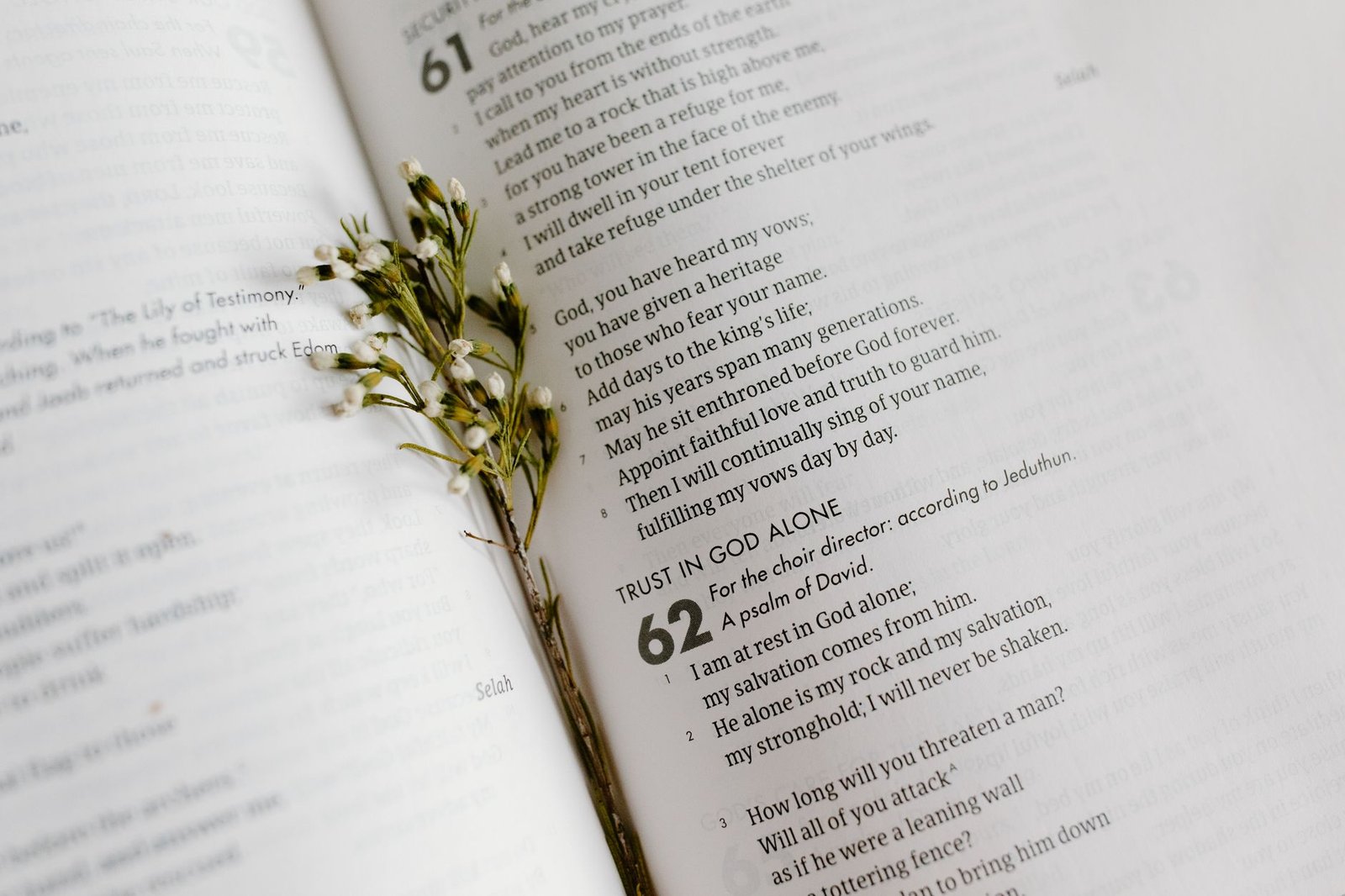
“Trust in him at all times, O people; pour out your heart before him; God is a refuge for us.” – Psalm 62:8
To “pour out your heart” implies taking everything inside—the doubts, the fear, the anger, the confusion, the exhaustion—and turning it upside down before the throne of grace. God is not intimidated by your tears. He does not turn away from your messy emotions. He invites you to bring them into His presence.
The Four Step Pattern of Biblical Lament
- Directing the Cry to God: Turning toward Him in prayer rather than nursing bitterness in isolation.
- Laying Out the Complaint: Honestly naming the pain, the injustice, or the confusion without hypocrisy.
- Asking for Help: Boldly requesting God’s intervention, mercy, or strength based on His character.
- Choosing to Trust: Concluding with an explicit act of reliance on God’s love, even before the situation changes.
When you pray through your pain using this pattern, you are following in the footsteps of Jesus Himself, who wept at the tomb of Lazarus and cried out in agony from the cross: “My God, my God, why have you forsaken me?” He bore our sorrows and understands our grief intimately. You can trust Him with your honest pain.
The Discipline of Remembrance: Looking Back to Lean Forward
When panic sets in during a crisis, our minds suffer from a form of spiritual amnesia. We forget how God delivered us in the past, how He provided when we thought there was no way, and how He sustained generations before us. In our fear, we act as though this current difficulty is the first time God has ever been tested.
To combat this tendency, Scripture repeatedly commands God’s people to practice the spiritual discipline of remembrance. Throughout the Old Testament, whenever God performed a great deliverance, He commanded Israel to build altars, pile up memorial stones, or celebrate annual feasts. These physical reminders served a purpose: when future generations—or those same people during future trials—looked back, they would remember that God is faithful.
“I will remember the deeds of the Lord; yes, I will remember your wonders of old. I will ponder all your work, and meditate on your mighty deeds.” – Psalm 77:11-12
When Asaph wrote Psalm 77, he was in deep distress. His soul refused to be comforted, and his eyes were held open through the night watches. But in verse 11, a dramatic shift occurs in the Psalm. Asaph makes a conscious, deliberate choice of the will: “I will remember.” He stops meditating on his trouble and begins meditating on the wonders of God throughout history—specifically how God parted the Red Sea for His people.
When you find yourself sinking in difficult times, look backward. Revisit the cross of Christ, where God’s ultimate love and devotion to you were permanently demonstrated. Revisit church history and see how God sustained martyrs, missionaries, and ordinary believers through plague, persecution, and hardship. Revisit your own life story and list the times God provided grace when you were at the end of your rope. The God who brought you safely through yesterday’s fire is the exact same God who holds you in today’s storm.

Guarding the Mind: Prayer, Thanksgiving, and Supernatural Peace
Trust is not merely an abstract concept; it is played out in the battleground of our thoughts. When difficult times arrive, our minds tend to run wild with catastrophic scenarios. We rehearse worst-case outcomes late into the night, constructing imaginary futures filled with disaster, and then we try to carry the emotional weight of those imagined futures today.
The Apostle Paul, writing from a dark Roman prison cell chained to a guard, provided the church with a practical and supernatural strategy for breaking the cycle of anxiety and establishing trust.
“Do not be anxious about anything, but in everything by prayer and supplication with thanksgiving let your requests be made known to God. And the peace of God, which surpasses all understanding, will guard your hearts and your minds in Christ Jesus.” – Philippians 4:6-7
The apostle outlines a spiritual exchange. We bring our anxiety—our helpless fretting—and hand it over to God through specific, intentional prayer. We name our needs before Him. Crucially, Paul adds that we must do this *with thanksgiving*.
Why thanksgiving in the middle of a trial? Because thanksgiving anchors our hearts in reality. Gratitude forces us to acknowledge that even in the worst trial, God is still good, blessings still remain, and His grace is still present. It shifts our focus from what we have lost to what God has promised.
When we make this exchange, the result is extraordinary: “the peace of God, which surpasses all understanding.” This is not a peace that makes sense to the world. It is not a peace based on favorable circumstances or logical outcomes. It is a supernatural quietness of soul that stands firm while everything around it crumbles. This peace acts as a garrison—a military guard—watching over your heart and your mind against the assaults of despair.
Eternal Weight: Framing Present Affliction in Light of Glory
Perhaps the most transformative perspective Scripture offers regarding hardship is the reality of eternity. When we view our lives through a purely earthly lens, suffering can seem utterly senseless and unfair. If this short life on earth is all there is, then decades of chronic pain, persecution, or grief are an unmitigated tragedy.
However, Scripture places our present suffering against the vast, breathtaking backdrop of eternity. In doing so, it does not diminish our current pain, but it puts it into proper cosmic proportion.
“For this light momentary affliction is preparing for us an eternal weight of glory beyond all comparison, as we look not to the things that are seen but to the things that are unseen. For the things that are seen are transient, but the things that are unseen are eternal.” – 2 Corinthians 4:17-18
Consider the contrast Paul constructs in these verses:
The Contrast of Faith
- Present Affliction: Described as “light” and “momentary.”
- Future Glory: Described as an “eternal weight” beyond all comparison.
- The Seen: Temporal, transient, and fading away.
- The Unseen: Lasting, permanent, and divine.
When Paul calls severe persecution, shipwrecks, beatings, and imprisonment a “light momentary affliction,” he is not being insensitive. He knew what it felt like to bleed for the gospel. But when he placed a lifetime of earthbound pain on one side of the scale, and the endless billions of ages of unfettered joy, glory, and communion with God on the other side, the pain became feather-light in comparison.
Your current storm has an expiration date. Your sorrow will not have the final word. The day is coming when Christ will wipe every tear from your eyes, when death, mourning, crying, and pain will be no more. Trusting God in difficult times means anchoring your hope in that coming day, knowing that the trial you are enduring now is serving to prepare you for an eternal inheritance that can never perish, spoil, or fade.
Living in the Shadow of the Almighty: Daily Practices for the Storm
Trusting God is not a one-time decision made at an altar rail; it is a daily, moment-by-moment practice of yielding your life into His hands. When the winds blow hard, how do we practically embody this trust in the rhythm of daily life?
First, **immerse yourself in Scripture daily**. When you are in a season of trial, your mind will naturally feed on fear if it is not intentionally fed on truth. Read the Psalms aloud. Write God’s promises on cards and place them where you can see them. Let the voice of God in Scripture be louder than the voice of panic in your head.
Second, **stay connected to the Body of Christ**. Isolation is the playground of despair. When we hurt, our temptation is often to withdraw into our shell, avoiding church and Christian friends. But God designed His people to bear one another’s burdens. Allow your brothers and sisters in Christ to pray for you, cook meals for you, weep with you, and speak truth to you when your own faith feels cold.
Third, **take life one day at a time**. When Jesus taught on anxiety in the Sermon on the Mount, He reminded His listeners: “Do not be anxious about tomorrow, for tomorrow will be anxious for itself. Sufficient for the day is its own trouble.” God promises grace for today, not for next month or next year. When you try to figure out how you will cope ten years from now with a hardship, you are carrying a burden without the promised grace to bear it. Ask God for your daily bread, and trust Him for tomorrow when tomorrow comes.
Finally, keep your eyes fixed on Jesus, the author and finisher of your faith. Remember that He is not an distant deity who demands trust from a comfortable distance. He came down into our broken world, assumed human flesh, walked our dusty roads, wept our tears, and bore the ultimate agony of the cross so that you might never have to walk through trial alone.
No matter how dark the road ahead of you may appear, the hand holding yours belongs to the King of Kings. He has promised never to leave you nor forsake you. You can trust Him in the valley, for He is already waiting for you in the light.
Frequently Asked Questions
How can I trust God when I feel abandoned?
It's normal to feel abandoned in trials, but remember that God is always near to the brokenhearted (Psalm 34:18). He invites you to bring your pain to Him and trust in His unfailing love.
What does the Bible say about suffering?
The Bible acknowledges the reality of suffering and encourages believers to find hope in God’s character (Lamentations 3:22-23). Suffering can produce endurance and spiritual growth (James 1:2-4).
How do I pray during difficult times?
Pray honestly, pouring out your heart to God (Psalm 62:8). Use the pattern of lament to express your pain, ask for help, and choose to trust Him even when circumstances are tough.
Why is remembrance important in faith?
Remembering God's past faithfulness helps combat spiritual amnesia during trials. It reinforces our trust in His promises and reminds us of His sovereignty (Psalm 77:11-12).
Final Thoughts
In the midst of life's storms, remember that God is a refuge for your weary soul. Trusting Him is a journey, and you are not alone. Lean on His everlasting arms, and let His truth guide you through each trial.
Further Study