The Sacred Bookends of Scripture
When we open the Bible and read it from beginning to end, we quickly discover that it is not a random collection of disconnected stories. Instead, Holy Scripture presents a single, breathtaking narrative crafted by God over generations. At the center of this narrative is God’s unwavering intention to dwell with His people in a world filled with peace, joy, and unfading life. Few symbols in Scripture illustrate this grand redemption story as beautifully as the Tree of Life.
Key Takeaways
- The Tree of Life symbolizes God's desire for eternal communion
- Sin separated humanity from this divine gift
- Jesus' sacrifice reopened access to eternal life
- Wisdom and righteousness reflect the Tree of Life's blessings.
The Tree of Life stands as a majestic bookend to the Bible. It appears in the opening chapters of Genesis, where human history begins, and it reappears in the closing chapters of Revelation, where human history reaches its glorious, eternal climax. Across the sprawling landscape of Scripture, this tree represents more than mere imagery or poetic scenery. It embodies the very presence, vitality, and eternal grace of God offered freely to humanity.
By tracing the theme of the Tree of Life throughout the Old and New Testaments, we learn how human sin lost access to God’s presence, how God graciously preserved the hope of restoration through His Word, and how Jesus Christ reopened the way to eternal life through His death and resurrection. Understanding this biblical journey provides comfort for our present struggles and a bright, anchor-like hope for our future.
The Planting of Eden and the First Promise of Life
The story begins in the Garden of Eden, a place designed by God as a sanctuary of perfect harmony. In this paradise, God planted every kind of tree that was pleasing to the eye and good for food. Yet among the vast, lush arboretum of Eden, two specific trees were placed in the center of the garden, holding profound spiritual significance for humanity’s future.
“And out of the ground the LORD God made to spring up every tree that is pleasant to the sight and good for food. The tree of life was in the midst of the garden, and the tree of the knowledge of good and evil.” – Genesis 2:9
The Tree of Life was a tangible sign of God’s generosity and continuous provision. Eating from it signified a life of unending vitality sustained by union with the Creator. God did not create Adam and Eve to be self-sufficient; rather, He created them to draw life perpetually from Him. The presence of the Tree of Life in the center of Eden demonstrated that spiritual and physical life were gifts to be received in trustful dependence upon the Lord.
Alongside this tree stood the Tree of the Knowledge of Good and Evil, which served as a test of human devotion and obedience. God granted Adam and Eve freedom to eat from every tree in the garden, with only one prohibition. By giving humanity a choice, God invited them into a relationship rooted in loving trust rather than compulsion. As long as Adam and Eve trusted God’s word and submitted to His wise authority, they enjoyed unfettered access to the Tree of Life and undisturbed communion with their Maker.
Reflection Point
Take a moment to ponder how you can draw life from your relationship with Christ each day. Seek His wisdom and nourishment to experience true vitality in your spiritual journey.
The Loss of Eternal Access: Cherubim and the Flaming Sword
Tragically, humanity chose rebellion over trust. Enticed by the serpent’s lie, Adam and Eve ate from the forbidden tree, breaking covenant with God and bringing spiritual death into the human experience. The immediate consequence of this fall was guilt, shame, and alienating separation from the Holy God who loved them.
In response to this rebellion, God pronounced judgment upon the serpent, the woman, and the man. Yet even in judgment, God displayed extraordinary mercy. He banished Adam and Eve from Eden to prevent them from eating from the Tree of Life while trapped in a fallen, sinful condition.
“Then the LORD God said, ‘Behold, the man has become like one of us in knowing good and evil. Now, lest he reach out his hand and take also of the tree of life and eat, and live forever—’ therefore the LORD God sent him out from the garden of Eden to work the ground from which he was taken. He drove out the man, and at the east of the garden of Eden he placed the cherubim and a flaming sword that turned every way to guard the way to the tree of life.” – Genesis 3:22-24
To modern readers, barring access to the Tree of Life might initially sound like a harsh punishment. However, a deeper consideration reveals profound grace. If Adam and Eve had eaten from the Tree of Life after falling into sin, they would have rendered their fallen, corrupt state permanent. They would have lived forever in a broken world, eternally separated from God’s holiness without any possibility of redemption or transformation.
By placing cherubim and a flaming sword at the entrance of Eden, God sealed the path to life until a divine remedy could be provided. The way back to paradise was closed to human effort, establishing a truth that resonates throughout the entire Bible: humanity cannot save itself, earn its way back to God, or conquer death through human ingenuity.
Wisdom as a Tree of Life in the Proverbs
Though physical access to Eden’s Tree of Life was lost, the Old Testament writers frequently used the image of the tree to describe the spiritual blessings available to those who walk faithfully with God. This is nowhere more evident than in the Book of Proverbs, where King Solomon repeatedly links the Tree of Life to godliness, wisdom, and spiritual health.
In Proverbs, wisdom is not merely intellectual knowledge or mental sharpness. Wisdom is the practical skill of living in obedience to God’s design. When a believer embraces divine wisdom, they experience a taste of Eden’s vitality right in the midst of a fallen world.
“She is a tree of life to those who lay hold of her; those who hold her fast are called blessed.” – Proverbs 3:18
Solomon personifies divine wisdom as a tree that yields spiritual nourishment to those who embrace her. Walking according to God’s precepts protects the believer from the destructive paths of folly, wickedness, and foolish pride. While human wisdom often leads to frustration and spiritual emptiness, God’s heavenly wisdom grounds the believer in peace, moral clarity, and enduring joy.
Living by God’s truth nurtures the soul in much the same way the Tree of Life nourished the body in Eden. Whenever we choose God’s ways over our selfish inclinations, we align ourselves with the true source of life, tasting the goodness and order God originally intended for human existence.
The Healing Power of Righteous Words and Hope Fulfilled
The imagery of the Tree of Life appears three more times in the Book of Proverbs, expanding our understanding of how spiritual vitality expresses itself in everyday life. These passages highlight how righteous character, fulfilled hope, and wholesome speech act as conduits of life to everyone around us.
In Proverbs 11, Solomon connects the lifestyle of the righteous with a life-giving tree that brings spiritual blessing to others:
“The fruit of the righteous is a tree of life, and whoever captures souls is wise.” – Proverbs 11:30
A life surrendered to God produces fruit that nourishes the weary and points lost souls toward salvation. The righteous person does not live merely for personal comfort; their life serves as a sanctuary where others find spiritual shelter, guidance, and encouragement.
In Proverbs 13, the teacher addresses the deep emotional realities of human longing and patient waiting:
“Hope deferred makes the heart sick, but a desire fulfilled is a tree of life.” – Proverbs 13:12
We have all felt the heavy ache of waiting for a long-cherished promise or prayer to be answered. When delay lingers, the human heart can grow weary and faint. Yet when God brings those righteous longings to fruition, the soul experiences an invigorating rush of spiritual renewal. Ultimately, this proverb finds its ultimate realization in God’s promises fulfilled through Jesus Christ, who satisfies the deepest longings of the human spirit.
Finally, Proverbs 15 highlights the immense influence of our daily speech:
“A gentle tongue is a tree of life, but perverseness in it breaks the spirit.” – Proverbs 15:4
Words carry extraordinary weight. Spoken in anger, deceit, or pride, words possess the tragic power to break spirits, destroy relationships, and inflict deep emotional wounds. Conversely, speech seasoned with grace, gentleness, and truth functions like a tree of life. Wholesome words bring healing to wounded hearts, restore broken relationships, and impart strength to those facing hardship.
Ezekiel’s Vision: Water, Trees, and Supernatural Abundance
As the story of the Old Testament unfolds, the ancient prophets carried a message of hope during Israel’s darkest moments. During the Babylonian exile, when Jerusalem lay in ruins and the temple was destroyed, the prophet Ezekiel received a magnificent vision of future restoration. God showed Ezekiel a restored temple from which a miraculous river flowed, bringing supernatural life to dead, barren landscapes.
As this river moved east toward the Dead Sea, it grew deeper and wider, bringing life wherever its waters flowed. Along the banks of this life-giving river, Ezekiel observed extraordinary trees that bore constant fruit and possessed miraculous healing properties.
“And on the banks, on both sides of the river, there will grow all kinds of trees for food. Their leaves will not wither, nor their fruit fail, but they will bear fresh fruit every month, because the water for them flows from the sanctuary. Their fruit will be for food, and their leaves for healing.” – Ezekiel 47:12
Ezekiel’s vision pointed Israel beyond their immediate return from physical exile toward a far grander spiritual reality. These extraordinary trees along the river’s edge recalled the lost Garden of Eden while signaling a coming era of divine renewal. The source of this life was not human effort or natural weather patterns, but the very presence of God flowing out from His sanctuary.
This prophetic imagery assured God’s suffering people that exile and death would not have the final word. God promised a future day when His grace would flow into the most desolate areas of human brokenness, turning desert wastes into fruitful gardens and bringing comprehensive healing to a hurting world.
The Cross of Christ: Where the Tree of Death Became the Tree of Life
To understand how the prophetic visions of the Old Testament become reality in the New Testament, we must look to the person and work of Jesus Christ. The central question of the biblical story remains: how can sinful humanity pass by the cherubim and the flaming sword to eat once again from the Tree of Life?
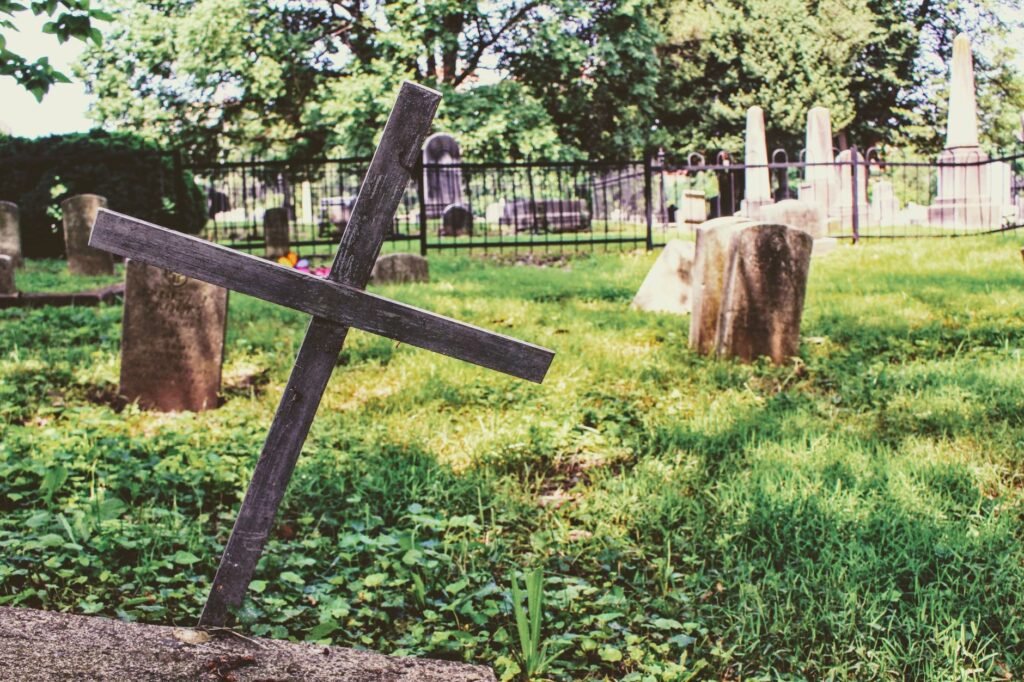
The Gospel gives a breathtaking answer. The pathway back to the Tree of Life was opened when Jesus Christ bore our judgment upon another tree—the wood of the Roman cross. The Apostle Peter explicitly connects Christ’s crucifixion to this imagery:
“He himself bore our sins in his body on the tree, that we might die to sin and live to righteousness. By his wounds you have been healed.” – 1 Peter 2:24
Here lies the heart of the Gospel message. Humanity was barred from the Tree of Life because of our sin and rebellion. To restore us, the sinless Son of God took our place, hanging upon an instrument of execution made from a tree. On Calvary, Jesus endured the fiery judgment of God’s holy law that stood against us. He willingly passed through the flaming sword of divine justice so that we might be spared.
Through His death and triumphant resurrection, Jesus transformed the cross—a symbol of shame, suffering, and death—into the ultimate Tree of Life. The cross is the place where eternal forgiveness flows, where our sin burden is removed, and where life everlasting is secured for all who believe.
Jesus echoed this profound reality during His earthly ministry when He promised eternal nourishment to those who place their trust in Him. Christ is the true source of life; outside of Him, humanity remains in spiritual starvation, but in Him, we receive life that never ends.
The Tree Restored: The Heavenly Jerusalem in Revelation
Because Christ conquered sin and death upon the cross, the door to paradise has been opened once again. In the New Testament’s opening letters to the seven churches, the exalted Jesus speaks words of immense comfort and promise to believers who endure trials and remain faithful.
“He who has an ear, let him hear what the Spirit says to the churches. To the one who conquers I will grant to eat of the tree of life, which is in the paradise of God.” – Revelation 2:7
This promise finds its glorious, full depiction in the final chapter of the Bible. In Revelation 22, the Apostle John is shown a vision of the New Jerusalem descending out of heaven from God. The paradise lost in Genesis is not merely recovered; it is transformed and expanded into a radiant city where God dwells among His redeemed people forever.
“Then the angel showed me the river of the water of life, bright as crystal, flowing from the throne of God and of the Lamb through the middle of the street of the city; also, on either side of the river, the tree of life with its twelve kinds of fruit, yielding its fruit each month. The leaves of the tree were for the healing of the nations.” – Revelation 22:1-2
Notice the glorious scale of this restored vision. In Genesis, the Tree of Life was situated in a localized garden. In Revelation, the Tree of Life flourishes in the heart of the holy city, spanning both sides of the river of the water of life. Its fruitfulness is unceasing, yielding a fresh harvest every single month without fail.
This imagery highlights the infinite abundance and eternal security of our future home. Scarcity, famine, and spiritual dryness will be banished forever. God’s redeemed people will live in an environment of eternal surplus, sustained endlessly by the life that flows directly from the throne of God and of the Lamb.
Leaves for the Healing of the Nations
One of the most comforting features of the Tree of Life in Revelation 22 is the purpose assigned to its leaves. John writes that “the leaves of the tree were for the healing of the nations.” This statement reveals the deep, restorative scope of God’s ultimate salvation.
Human history has been severely scarred by ethnic division, political conflict, warfare, and widespread suffering. Sin shattered not only humanity’s relationship with God, but also human fellowship with one another. Yet in the New Jerusalem, God’s redemption brings complete, comprehensive healing to every nation, tribe, and tongue.
John immediately explains the glorious condition of this restored creation in the verse that follows:
“No longer will there be anything accursed, but the throne of God and of the Lamb will be in it, and his servants will worship him.” – Revelation 22:3
The curse pronounced in Genesis 3 is permanently revoked. Every consequence of human rebellion—sickness, sorrow, pain, grief, and physical decay—is wiped away forever. The leaves of the Tree of Life symbolize the total banishment of spiritual and physical ailments. In eternity, God’s people will enjoy unhindered fellowship with God and perfect unity with one another.
Access to this eternal paradise is not automatic, nor is it earned through human virtue. It is granted solely through the redeeming blood of Jesus Christ, as John affirms later in the same chapter:
“Blessed are those who wash their robes, so that they may have the right to the tree of life and that they may enter the city by the gates.” – Revelation 22:14
To wash one’s robes means to rely entirely upon Jesus Christ for cleansing and righteousness. Those who trust in Christ receive the right to enter the holy city and partake freely of the Tree of Life, living in the joyful presence of God for all eternity.
Living in Light of the Tree Today
As believers who live between the cross of Christ and His glorious return, how should the truth of the Tree of Life shape our daily walks of faith?
1. Rest in the Completed Work of Christ
First, we can rest with quiet confidence in what Jesus has accomplished on our behalf. We no longer need to live under the crushing weight of trying to earn God’s favor or climb our way back into paradise. Jesus passed through the flaming sword for us, bearing the judgment our sins deserved. By faith in Him, our names are written in the Book of Life, and our eternal future with God is secure.
2. Cultivate Life-Giving Words and Actions
Second, as citizens of God’s coming kingdom, we are called to embody the life-giving character of the Tree of Life in our current daily relationships. We can ask ourselves: Do my words bring healing, peace, and spiritual comfort to those around me, or do they sow seeds of bitterness and strife? When we speak God’s truth in love, extend forgiveness, and offer tangible help to those in need, we reflect the beauty of God’s paradise to a dying world.
3. Anchor Your Hope in Eternal Glory
Finally, keeping our eyes fixed on the Tree of Life provides steady hope during seasons of suffering, illness, and earthly loss. The trials, chronic pains, and heartaches of this present life are temporary. A day is swiftly approaching when God will wipe away every tear from our eyes, and we will gather beside the crystal river in the New Jerusalem.
Until that glorious day arrives, let us remain rooted deeply in Jesus Christ, drawing daily strength from His Holy Spirit, and sharing the good news of His salvation so that many others may join us in partaking of the Tree of Life forever.
Frequently Asked Questions
What is the significance of the Tree of Life in the Bible?
The Tree of Life represents God's provision and the promise of eternal life. It symbolizes the relationship between humanity and God, signifying the fullness of life available through obedience and trust in Him.
How did sin affect humanity's access to the Tree of Life?
Sin caused Adam and Eve to lose access to the Tree of Life, resulting in spiritual death and separation from God. This loss underscores humanity's need for redemption and the restoration of that relationship through Christ.
How does wisdom relate to the Tree of Life in Proverbs?
In Proverbs, wisdom is described as a Tree of Life, providing spiritual nourishment and guidance. Embracing divine wisdom leads to a fulfilling life aligned with God's design, offering vitality amidst challenges.
How does Jesus fulfill the promise of the Tree of Life?
Jesus fulfills the promise by becoming the ultimate Tree of Life through His death on the cross. His sacrifice restores humanity's access to eternal life, offering forgiveness and new life to all who believe.
Final Thoughts
The story of the Tree of Life invites us to reflect on our relationship with God. Through Christ, we are offered not only forgiveness but also a vibrant, life-giving connection to our Creator. May we continually seek His presence and wisdom, drawing from the wellspring of life He provides.