
Few issues in public discourse carry as much emotion, debate, and complexity as migration. Yet long before modern borders, visas, and national policies were codified, the pages of Scripture were filled with stories of people on the move. From Abraham leaving his homeland in response to God’s call, to Jacob’s family traveling to Egypt to escape a catastrophic famine, displacement is a recurring reality across biblical history.
Key Takeaways
- God calls us to love immigrants and refugees
- Our history shapes our empathy for others
- Jesus identifies with the vulnerable
- Every person is an image-bearer of God.
When we open the Bible to understand how God views the immigrant, the refugee, and the stranger, we do not find cold political theory. Instead, we encounter a God who binds His own character to the care of the vulnerable, calling His people to mirror His generosity and grace. Examining what Scripture reveals about sojourners offers a grounded, compassionate, and distinctly Christian perspective on welcoming the outsider.
God’s Heart for the Stranger and Sojourner
In the Old Testament law, God consistently linked the plight of the foreigner (often translated as “sojourner” or “stranger”) with two other vulnerable groups: the fatherless and the widow. Together, these three groups represented those without traditional social safety nets, family protections, or land ownership. God made it explicitly clear that His righteousness involves defending those who cannot defend themselves.
When God established the covenant with Israel at Sinai, He instituted specific protections for foreign residents. They were not to be mistreated, exploited, or denied justice in the courts. Instead, the law commanded Israel to actively love and provision for them.
“When a stranger sojourns with you in your land, you shall not do him wrong. You shall treat the stranger who sojourns with you as the native among you, and you shall love him as yourself, for you were strangers in the land of Egypt: I am the LORD your God.” – Leviticus 19:33-34
Notice the depth of this commandment. God did not simply instruct Israel to tolerate the foreigner; He commanded them to love the stranger as themselves. In the economic realm, God required farmers to leave the corners of their fields unharvested so that the poor and the foreigner could glean food with dignity. Caring for the immigrant was not viewed as an optional act of charity, but as a basic obligation of holy living.

Remembering Our Own History: Sacred Empathy
Why did God place such heavy emphasis on caring for the foreigner? Throughout the Old Testament, God repeatedly gives a profound reason: Israel’s own history of suffering and divine rescue. Israel spent centuries as oppressed foreigners in Egypt before God miraculously liberated them. God used that shared national memory as an engine for empathy.
“He executes justice for the fatherless and the widow, and loves the sojourner, giving him food and clothing. Love the sojourner, therefore, for you were sojourners in the land of Egypt.” – Deuteronomy 10:18-19
By reminding Israel of their former hardship, God prevented them from developing a spirit of entitlement or hardness of heart. They were never meant to forget what it felt like to be vulnerable in a land that was not their own. Empathy was to be a defining characteristic of God’s redeemed community.
For Christians today, this principle carries deep spiritual weight. Even if we have never crossed an international border, every believer shares a history of spiritual exile. We were once far off, strangers to the covenants of promise, but God showed us mercy while we were still spiritual outsiders. Remembering God’s unmerited favor toward us transforms how we view others who are searching for safety, belonging, and home.
Reflection Point
Take a moment to pray for those who are displaced and seek ways to extend love and support to them in your community.
The Savior as a Refugee
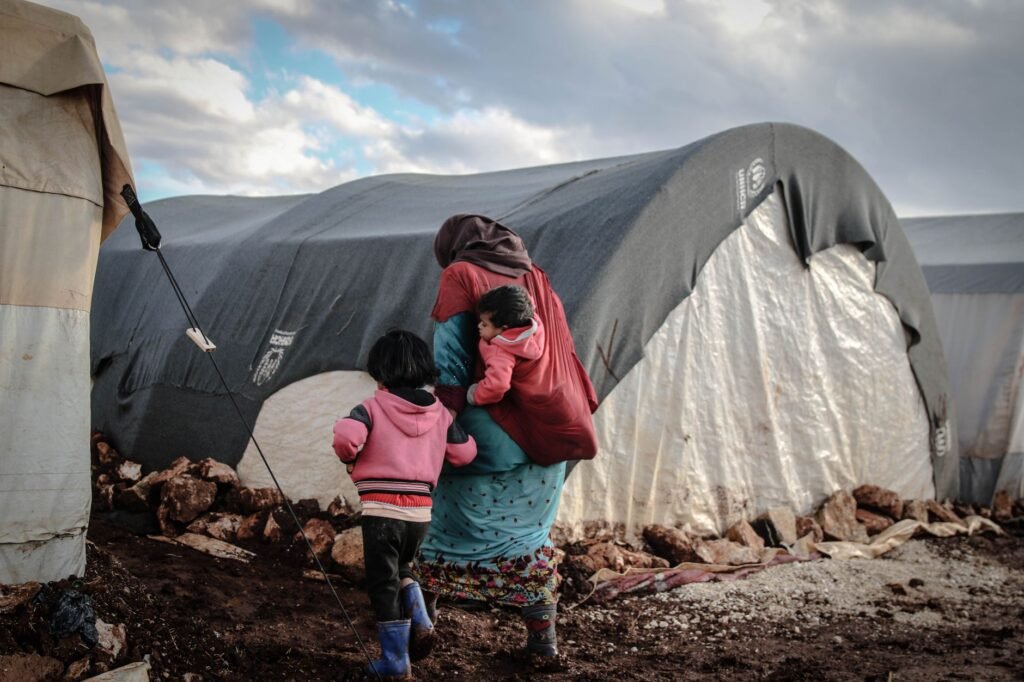
When we turn to the New Testament, the narrative of displacement touches the life of Jesus Christ Himself. Shortly after His birth in Bethlehem, the Holy Family faced a lethal threat from King Herod, who sought to murder the child. Warned in a dream, Joseph took Mary and the infant Jesus and fled under the cover of night across the Egyptian border.
“Now when they had departed, behold, an angel of the Lord appeared to Joseph in a dream and said, ‘Rise, take the child and his mother, and flee to Egypt, and remain there until I tell you, for Herod is about to search for the child, to destroy him.’ And he rose and took the child and his mother by night and departed to Egypt.” – Matthew 2:13-14
Consider the profound mystery of this account: the Son of God spent His earliest years as a young child seeking asylum in a foreign country. Jesus knew what it was to live far from home, dependent on the hospitality of a neighboring nation to survive political tyranny. This reality assures us that when refugees flee violence and hardship today, they are seen and understood by a Savior who personally walked that difficult path.
Welcoming Christ in the Vulnerable
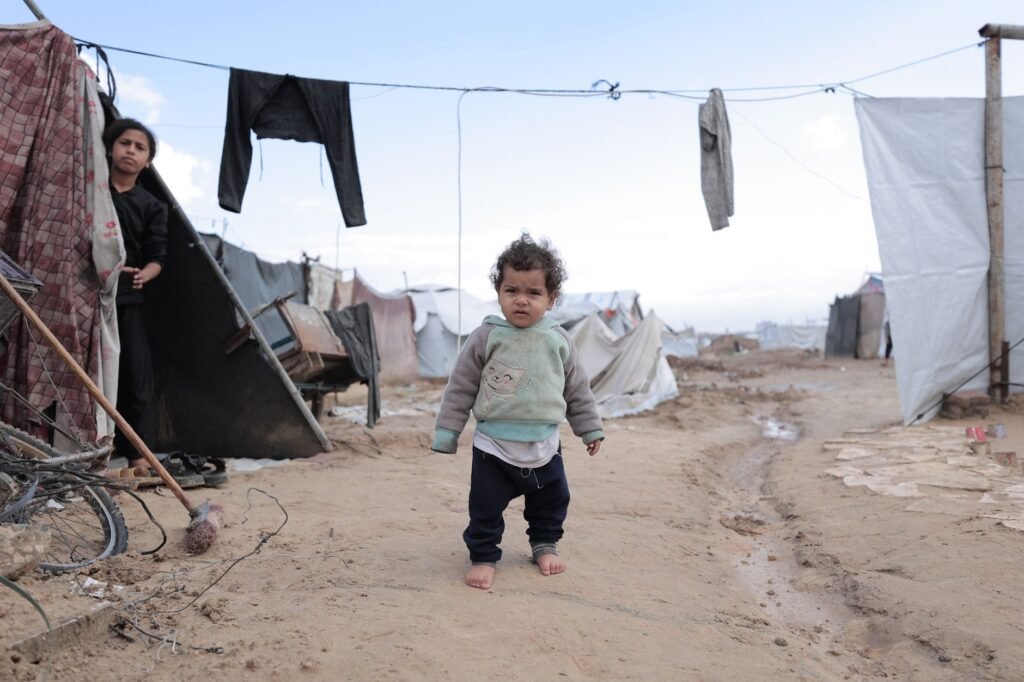
In His earthly ministry, Jesus taught that our treatment of the vulnerable directly reflects our heart toward Him. In the passage describing the judgment of the nations, Jesus identifies Himself so closely with the needy that serving them is described as serving Christ Himself.
“For I was hungry and you gave me food, I was thirsty and you gave me drink, I was a stranger and you welcomed me.” – Matthew 25:35
The Greek word for hospitality in the New Testament is philoxenia, which literally translates to “love of strangers.” It stands in direct contrast to xenophobia, which is the fear or hatred of strangers. True biblical hospitality is not merely hostessing friends and family; it is opening our hearts, resources, and communities to those who are outside our immediate circles.
Early Christians took this call seriously. In a Roman world often characterized by cruelty toward outsiders, the church stood out for its radical generosity, caring for widows, orphans, travelers, and victims of plagues regardless of their ethnicity or origin. This love for the stranger was one of the primary ways the early church demonstrated the reality of the gospel to a watching world.
Citizens of Heaven and Kingdom Hospitality
Finally, Scripture offers a beautiful framework for how believers should view their ultimate identity in light of eternity. The apostle Paul reminds Christians that our ultimate citizenship is not tied to earthly kingdoms, but to the kingdom of God.
“So then you are no longer strangers and aliens, but you are fellow citizens with the saints and members of the household of God.” – Ephesians 2:19
Through the cross, Christ broke down the hostility that divided humanity, bringing people from every tribe, tongue, and nation into one spiritual family. When we view the world through this gospel lens, our priorities shift:
- We see every person as an image-bearer of God: Regardless of legal status or place of origin, every immigrant and refugee possesses inherent dignity given by the Creator.
- We practice practical compassion: Whether through supporting humanitarian relief, assisting local resettlement efforts, or offering friendship to newcomers in our neighborhoods, we seek tangible ways to serve.
- We share the hope of the gospel: The physical gathering of nations into our local communities creates unprecedented opportunities to share the love and salvation found in Jesus Christ.
As pilgrims living in a fallen world, we look forward to the day when people from every nation will gather around the throne of God in perfect peace. Until that day comes, the church is called to be an outpost of kingdom mercy—a place where the forgotten find care, the displaced find family, and the stranger finds a welcome in Jesus’ name.
Frequently Asked Questions
What does the Bible specifically say about how we should treat immigrants?
The Bible instructs us to treat immigrants and sojourners with love and respect, as seen in Leviticus 19:33-34, where God commands His people to love the stranger as themselves.
Why is empathy important when discussing immigration?
Empathy is essential because it reminds us of our own vulnerabilities and the mercy God has shown us. Deuteronomy 10:18-19 emphasizes that our history of suffering should inspire us to care for those in need.
How did Jesus exemplify the experience of refugees?
Jesus' early life included seeking asylum in Egypt to escape King Herod's threat, illustrating His deep understanding of the plight of refugees. This connection assures us that He empathizes with those fleeing violence today.
What can churches do to support refugees and immigrants?
Churches can provide practical support by assisting with resettlement, offering community resources, and fostering relationships with newcomers. By embodying kingdom hospitality, the church can reflect Christ's love to the vulnerable.
Final Thoughts
As we reflect on God's heart for the vulnerable, let us commit to being agents of His love and compassion in our communities. May we remember our own journeys and extend grace to those seeking refuge and belonging. Together, we can create a welcoming space where all can experience the love of Christ.